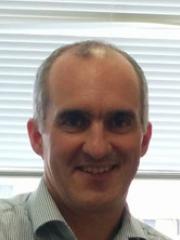
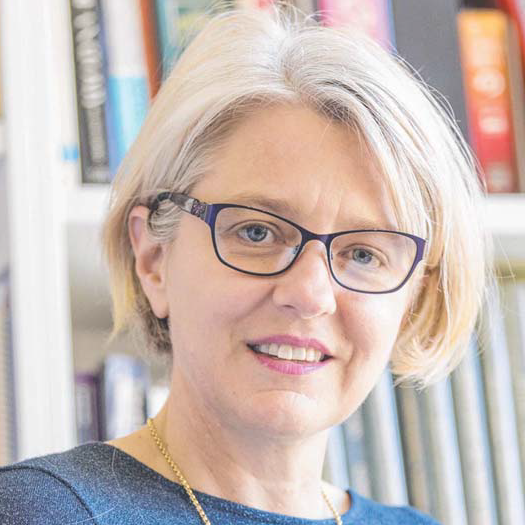
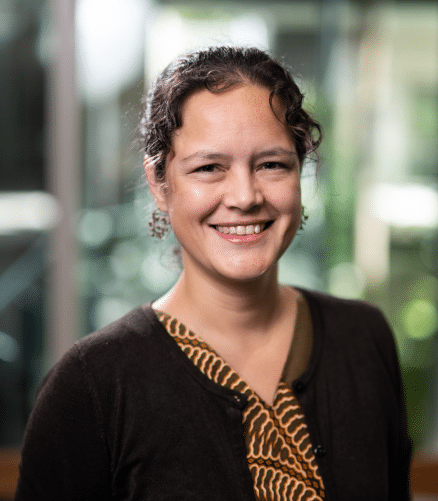
Held on 3 June 2025 at Queensland University of Technology, Gardens Point campus.
We had a very successful day with 75 attendees in total, most of whom were HDR students presenting their research work. We thank all presenters and attendees, including keynote speakers Professor Emma McBryde and Dr Nadiah Kristensen, and the organisers below.
A very big thank you to ANZIAM for funding the 2025 QANZIAM conference, which enabled us to run the conference without a registration fee. We also thank Queensland University of Technology for hosting and donating the use of the rooms.
QUT
QANZIAM Treasurer
QUT
QANZIAM Ordinary Member
Griffith University
Griffith University
QANZIAM Chair
QUT
QUT
QANZIAM Ordinary Member
QUT
QANZIAM Ordinary Member
University of Queensland
QANZIAM Ordinary Member
Three parallel sessions ran throughout the day. Scroll horizontally on mobile to see all sessions.
| Time | GP-S-310 (Room 310) | GP-S-308 (Room 308) | GP-S-309 (Room 309) |
|---|---|---|---|
| 08:30 – 09:00 | Registration | ||
| 09:00 – 09:20 | Welcome – Conference officially opened by Professor Anthony P Roberts, Head of School of Mathematical Sciences, QUT | ||
| 09:20 – 09:30 | Break to move to parallel sessions | ||
| Chair: Tim Moroney | Chair: Zachary J Wegert | Chair: Scott McCue | |
| 09:30 – 09:50 | Connor Mallon Topology Optimisation of Piezoresistive materials |
Stephen Sanderson Prediction of nonequilibrium response from equilibrium dynamics |
Haoyu Wang Contraction into disjoint clusters in an active gel model for actomyosin networks |
| 09:50 – 10:10 | Nina Rynne Optimal Control Modelling of Carbon Abatement Strategies |
Luke Filippini Analysis of transition probabilities for stochastic models of anisotropic diffusion |
Jordan Holdorf A Spatio-Temporal Framework for Financially Viable Restoration Under Climate Uncertainty |
| 10:10 – 10:30 | Llewyn Randall Amphitheatre gully erosion modelled with coupled hydrology and sediment transport |
Obi Carwood Mathematical Modelling of Drug Release from Functionally-Graded-Delivery Systems |
Grace Burtenshaw Extreme Value Modelling and Risk Assessment of a Non-Stationary Timeseries |
| 10:30 – 11:00 | Morning Tea | ||
| Chair: Pascal Buenzli | Chair: David Warne | Chair: Hilary Hunt | |
| 11:00 – 11:20 | Shahak Kuba Bones, why is their growth so wacky? |
S M Erfanul Kabir Chowdhury A sub-diffusive approach to diffusion MRI in white matter |
Sarah Vollert Calibrating ecosystem models when data is scarce |
| 11:20 – 11:40 | Mason Lacy Importance of spatial arrangement and growth factor secretion for T cell expansion |
Sishou Zhou Improving sub-diffusion dMRI model parameter estimation using PINNs |
Sithara Wijekoon Missing Data Imputation Based on Conditional Sampling from Vine Copulas |
| 11:40 – 11:50 | Break to move to keynote | ||
| 11:50 – 12:40 | KeynoteEmma McBryde – Modelling infectious diseases to inform policy and clinical trials | ||
| 12:40 – 13:40 | Lunch | ||
| Chair: Jessica Crawshaw | |||
| 13:40 – 14:30 | KeynoteNadiah Kristensen – The evolution of human cooperation: homophily, non-additive benefits, and higher-order relatedness | ||
| 14:30 – 14:40 | Break to move to parallel sessions | ||
| Chair: Shahak Kuba | Chair: Patrick Grant | Chair: Stephen Sanderson | |
| 14:40 – 15:00 | Riley Whebell Image-based homogenisation for a multiscale model of sugarcane bagasse pretreatment |
Jonathan Wilton Robust Loss Functions for Training Decision Tree Classifiers with Noisy Labels |
Eliza Domann Parameter identifiability in a complex dynamic model of climate change effects on algal blooms |
| 15:00 – 15:20 | Mitchell Griggs Simulating Higher-Order Solutions for Stochastic Equations with Indivisible Delays |
Hao Zhou Data-Driven Neural Network Methods for Portfolio Diversification |
Dasuni Amanda Salpadoru Parameter estimation and identifiability analysis of bistable ecosystem |
| 15:20 – 15:50 | Afternoon Tea | ||
| Chair: Shahak Kuba | Chair: Riley Whebell | Chair: Llewyn Randall | |
| 15:50 – 16:10 | Ryan Kelly Misspecification-robust methods for SBI |
Chang Chen Optimal Asset Allocation with Quadratic Variation as a Risk Measure |
Jamintha Samarakoon Adaptive Simulated Annealing for Autonomous Labour Market Delimitation |
| 16:10 – 16:30 | Patrick Grant Modelling Moisture Migration and Swelling in Engineered Wood Products |
Anuradha Dewage Using Explainable AI for Conservation Decision Making |
Adel Mehrpooya A simple model of osteocyte network control in bone mechanical adaptation |
| 16:30 – 16:50 | Renee Oldfield Average entropy for random Blaschke products |
Alistair Falconer De novo pattern formation in hydra spheroids |
Joshua Peters Jumping for diffusion in random metastable systems |
| 16:50 – 17:10 | Close of conference | ||
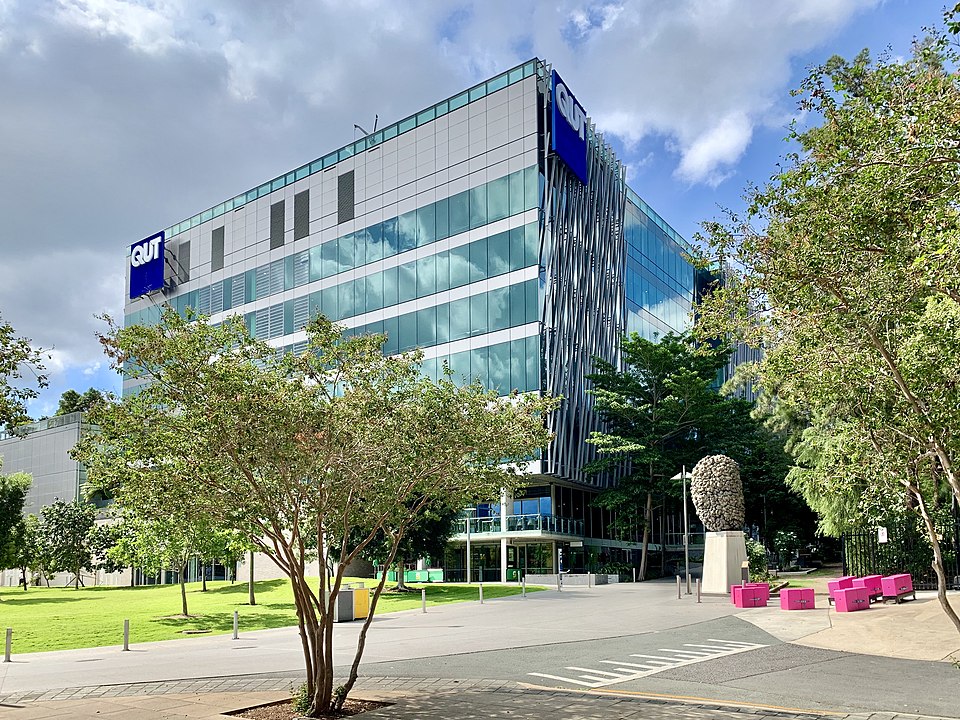
Emma McBryde
Collaborators: Michael Meehan, Claire Brereton, Alec Henderson
University of Queensland
Infectious diseases continue to be a scourge on the world. COVID-19 reminded us of the profound impact infections have had on humanity. Tuberculosis continues to kill over 1 million people per year. In this talk I will describe a number of projects that illustrate the current mathematical and statistical methods used at the interface of data analysis, simulation and public health action.
Nadiah Kristensen
Collaborators: Hisashi Ohtsuki, Ryan Chisholm
Queensland University of Technology
We humans are intrinsically moral beings driven towards pro-social and cooperative behaviour, a characteristic that seems to contradict the selfishness implied by a Darwinian "survival of the fittest" perspective. This apparent paradox raises fundamental questions: how do people cooperate, and how did cooperation first arise? In this talk, I examine two key factors that may explain the evolution of cooperation: homophily and non-additive benefits. Homophily is the tendency to form groups with similar others, and it was likely a significant factor promoting cooperative behaviour in our early hominin ancestors. Simultaneously, cooperation can be sustained in situations where the benefit from many cooperators working together differs from the additive sum they would have accrued working individually. However, significant mathematical challenges emerge when combining these factors -- understanding interactions among related individuals in games with non-additive benefits. I will first introduce these problems and explain how they have been solved in simpler cases, then progressively address the more complex scenarios. The talk will introduce higher-order relatedness concepts as analytical tools, and explore case studies that may illuminate how we evolved into the exceptionally cooperative and successful species we are today.
Bio: Nadiah Kristensen is a postdoctoral fellow in the School of Mathematical Sciences at QUT. Her academic journey has taken her through universities in Singapore, Switzerland, Japan, and Sweden, where she has worked on theoretical models in evolution and ecology. Her interests include macro-ecology, population dynamics, eco-evolutionary models (adaptive dynamics), and most recently, evolutionary game theory.
All abstracts in alphabetical order by first name. Click to expand.
Supervisors/Collaborators: Dr. Pascal Buenzli, Dr. Vivien Challis, Dr. Nathalie Bock • QUT
Mechanical stimulation of bone tissue significantly influences signal transmission within the osteocyte network and at the bone surface, thereby driving processes of bone adaptation and remodeling. Accurate understanding and quantifying of this mechanism, governed by the reaction-diffusion of signals across the osteocyte network, are crucial for investigating the role of mechanical forces in cellular responses and regulation of bone formation and resorption. This paper extends a deterministic random walk model, originally designed for reaction-diffusion in a 1D network with fixed boundaries, to a dynamic 1D osteocyte network coupled with mechanical adaptation. By quantifying flux at the network boundaries, we examine the osteoblast and osteoclast responses to mechanical loading. Simulation results show that a model simulating bone remodeling as a gradual process better captures the slower, time-dependent behavior of osteoblasts and osteoclasts, compared to rapid remodeling models.
Collaborator: Dietmar Oelz • UQ
Hydra is a freshwater organism with remarkable regenerative capacity -- after injuries such as amputation, bisection or even disassociation at the cellular level a hydra is capable of regenerating to a functional organism within days. A feature of this regeneration is that the tissue will self-assemble into a homogeneous sphere, which then polarises along a body axis after undergoing mechanical stimulation. In this talk we present a simulation study exploring our mechano-chemical model, wherein the surface on which the pattern forms plays a dynamic role in the process.
Supervisors: Dr David Warne, Assoc Prof Helen Thompson, Dr Julie Vercelloni • QUT
Machine learning is increasingly being used in species distribution models to improve predictive accuracy, yet its lack of explainability remains a key challenge for ecological applications. Using SHAP, we demonstrate the inconsistencies of different machine learning techniques in terms of their local and global explainability. We aim to develop a framework for identifying differences across explainability of machine learning models, which can be particularly beneficial in conservation decision making.
Supervisor: Duy-Minh Dang • UQ
We determine the optimal decumulation strategy for defined contribution pension plans, with an Annually Recalculated Virtual Annuity spending rule. Our objective is to maximize expected total withdrawals and minimize quadratic variation, providing investors with better control over risk throughout the investment horizon. We propose a data-driven Neural Network approach to determine the optimal allocation, incorporating realistic constraints such as no leverage and discrete rebalancing.
Collaborators: Zachary Wegert, Vivien Challis • QUT
We perform topology optimisation of self-sensing grippers. This work introduces, for the first time, an objective term for recoverability into the topology optimisation formulation for compliant mechanisms. We consider a coupled structural and electrical multiphysics model and adopt a level-set topology optimisation approach that is particularly well-suited to the given problem by exploiting bespoke machinery developed in the Julia software package GridapTopOpt.
Supervisors: Dr David Warne, Dr Matthew Adams, Assoc Prof Kate Helmstedt • QUT
We use a profile likelihood approach, which is well-suited for assessing parameter identifiability by quantifying uncertainty and detecting potential non-identifiability issues. This method is applied to estimate parameters and analyse the practical identifiability of key parameters and critical thresholds for the Carpenter Lake eutrophication model in a range of different monitoring scenarios.
Supervisors: Dr Matthew Adams, Prof Chris Drovandi, Dr Gloria M. Monsalve-Bravo (UQ) • QUT
Microcystis blooms pose a myriad of risks to human and animal health, and the environment. A group of ecologists have been developing a mathematical model to describe the dynamic changes in the growth of Microcystis. Although further research has been undertaken, in-depth global or semi-global sensitivity analysis has yet to be performed. Conducting a sensitivity analysis could provide deeper insights into parameter relationships and identify gaps in the current data.
Supervisors: Dr Meagan Carney, Dr Joe Lane • UQ
As the Australian energy market increases its circulation of renewable energy, extreme weather events increasingly disrupt supply. My project aims to develop a statistical tool using classical extreme value modelling techniques to provide the means for improved forecasting and estimations of extremes in a non-stationary setting.
Supervisor: Dr. Duy-Minh Dang • UQ
This talk explores the application of a data-driven neural network approach for international diversification of investment portfolios, particularly for Australian investors. We consider a portfolio construction that includes stock and bond indices from both Australian and American markets, optimizing diversified rebalancing strategies to identify the most effective asset allocation.
Collaborator: Dietmar Oelz • UQ
We demonstrate that a minimal mathematical model for viscous active gels explains the formation of disjoint clusters such as those observed during the contraction of reconstituted actomyosin networks. In d dimensions, we obtain closed-form expressions for the gel density profiles of cluster solutions which vanish outside intervals of finite length.
Supervisors: A/Prof Gentry White, A/Prof Helen Thompson • QUT
We developed the Adaptive Simulated Annealing for Autonomous Labour Market Delimitation (AdSA-ALMD) algorithm. This method preserves labour market boundaries by reducing variance in solutions, minimising misallocations, and dynamically identifying suitable threshold values. Results demonstrate that AdSA-ALMD outperforms existing methods in terms of consistency and reducing misallocations.
Supervisors: Dr Nan Ye, Dr Miao Xu, Dr Abigail Koay • UQ
We found that common robust loss functions for classification are generally ineffective when used with decision trees, as they often result in overly aggressive early stopping and underfitting. To address this limitation, we introduce a novel loss function -- the negative exponential loss -- designed to mitigate underfitting while preserving robustness against noisy labels.
Supervisors: Melanie Roberts, Ivan Diaz-Rainey, Chris Brown • Griffith University
We extend a temporal optimisation framework to a spatio-temporal setting, incorporating site-specific factors including restoration costs, carbon sequestration rates, and exposure to stochastic climate events. Results show that accounting for spatial heterogeneity and climate uncertainty can shift restoration priorities, alter adaptive strategies over time, and ultimately influence projects' financial and environmental viability.
UQ
This work investigates fluctuations in a class of random dynamical systems, arising from randomly perturbing a piecewise smooth expanding interval map with more than one invariant subinterval. We show that the distributions of jumps of a time-homogeneous Markov chain approximate the distributions of jumps for random metastable systems.
Supervisors: Dr Melanie Roberts, Dr Nathan Garland, Dr Brendan Roddy • Griffith University
Gully erosion is a major source of sediment pollution in coastal ecosystems like the Great Barrier Reef. I present a new event-based model that couples conservative hydrology, sediment transport, and changes in gully geometry equations, with insight into the profiling of sediment sources and sinks in large gullies.
Supervisors: Dr Elliot Carr, Dr Adrianne Jenner • QUT
We discuss methods for deriving and obtaining transition probabilities for on-lattice stochastic models of anisotropic particle diffusion, motivated by potential applications to neurological diseases and disorders. We derive transition probabilities from a finite volume discretisation of the diffusion equation on a rectangular lattice and two hexagonal lattice configurations.
Supervisors: Dr Adrianne Jenner, A/Prof Pascal Buenzli • QUT
A stochastic agent-based model is used to model T cell expansion in micro-rod scaffolds. The model includes activation and expansion of T cells through interactions between T cells and micro-rods and reproduces key features observed in laboratory experiments. These models are used to inform alterations to micro-rods that will likely improve the speed and efficiency of T cell expansion for adoptive cell therapy.
Supervisors: Pamela Burrage, Kevin Burrage • QUT
The Milstein scheme becomes significantly more complicated when indivisible delays are included, and a simulation method for this is not yet known. In this talk, I will explain the cause of this complication, as well as present my simulation technique.
Supervisors: Ryan Heneghan, Melanie Roberts, Michael Bode • Griffith University
This talk presents a novel optimal control framework for analysing the interaction between emissions reduction and carbon dioxide removal strategies in climate mitigation. Our approach employs Pontryagin's maximum principle to establish a rigorous mathematical foundation for determining optimal intervention sequences.
Supervisors: Drs Elliot Carr and David Warne • QUT
We consider radially symmetric geometries that utilise functionally-graded-materials such that our model's diffusivity and reaction-rate parameters are spatially varying. We develop closed-form semi-analytical expressions that solve the total fraction of drug released, yielding release profiles for each geometry dimension and coating type.
Supervisors: Ian Turner, Steven Psaltis, Maryam Shirmohammadi • QUT
We focus on cross laminated timber EWPs. Timber swells as it takes on moisture, which can cause internal stresses. In an EWP, moisture migration can induce a shear stress along the glue line, particularly if one board is wet and swelling while the other remains dry, potentially resulting in delamination -- a severe structural failure.
Supervisor: Cecilia Gonzalez-Tokman • UQ
We consider the measure theoretic entropy of random Blaschke products, and show that the average entropy for a family of expanding on average random Blaschke products can be obtained from the derivative of the maps.
Collaborators: Ian Turner, Elliot Carr • QUT
We use microCT imaging to reveal bagasse microstructures in 3D and compute effective material properties throughout the particle. We also propose a spectral clustering strategy to group similar regions together, showing the clustering separates visibly distinct regions and that the error incurred is small.
Supervisors: Chris Drovandi, David Warne • QUT
I present recent work on developing approaches that are robust to misspecification in simulation-based inference, drawing on ideas from approximate Bayesian computation and generalised Bayesian inference, specifically focusing on robust summaries, the choice of a robust loss function, and error modelling.
Supervisors: Dr. Qianqian Yang, Dr. Timothy Moroney, Dr. Adrianne Jenner • QUT
We propose a novel sub-diffusive difference model based on a fractional-order mathematical framework to characterize the microstructure of white matter. The model incorporates both two- and three-compartment axon configurations, enabling effective separation of the extra-cellular space signal from intra-cellular contributions.
Supervisors: Chris Drovandi, Cailan Jeynes-Smith, Luz Pascal, Matthew Adams • QUT
We develop a Bayesian framework for calibrating ecosystem models to any known non-empirical features of the species populations -- such as limits to population sizes and rates of change, known responses to conservation, or theoretical properties such as stable coexistence. We demonstrate that where ecological datasets are limited, non-empirical knowledge can supplement data, leading to better ecosystem models and predictions.
Supervisors: Pascal R. Buenzli, Matthew J. Simpson • QUT
We present a stochastic, cell-based mathematical model of osteoblast forming new bone tissue to explore how the rate and pattern of bone tissue growth depends on osteoblast cell-cell mechanical interactions and the stochastic embedment of osteoblasts into newly formed bone tissue. Our model effectively replicates two key phenomena: the smoothing of resorption cavities and the slowdown of new tissue deposition.
Supervisors: Qianqian Yang, Timothy Moroney, David Warne • QUT
We present a novel PINN framework to enhance the accuracy and efficiency of parameter estimation in the sub-diffusion model for dMRI data, leading to more precise parameter maps of the brain.
Supervisors: A/Prof. Gentry White, Edwin Lu, A/Prof. Helen Thompson • QUT
We propose an imputation method using C-vines and D-vines that preserves dependencies among continuous variables and specifically addresses non-monotone missing patterns. Results show that our approach outperforms comparative methods, including predictive mean matching and other copula-based imputation methods.
Collaborators: Caius Robertson, Debra J. Bernhardt • UQ
This presentation shows examples of how response theory can be used to predict the entire linear response regime of a nonequilibrium system using only equilibrium simulations, thereby avoiding the need for multiple nonequilibrium simulations under different field strengths.